Beggar on Horseback
(1924)
By George S. Kaufman and Marc Connelly
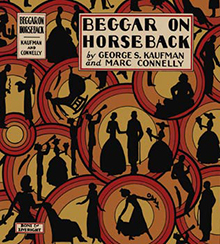
Connelly and Kaufman took on their greatest experimentation with this play, an investigation into the then-popular form of Expressionism. A stream-of-consciousness style, with garish, nightmarish sequences, Expressionism had been successfully channeled by Eugene O’Neill for his The Emperor Jones and The Hairy Ape.
For performance rights, contact: Concord Theatricals
Table of Contents
The Plot
 Neil McRae is a composer of serious music who orchestrates popular songs in order to keep a roof over his head; he dreams of a better life and Cynthia, the terribly pleasant girl down the hall, dreams of Neil. On the advice of a doctor friend, however, Neil proposes to the daughter of a rich industrialist. But, clearly such a materialistic future preys on Neil’s mind—in an extended dream sequence, he murders his potential fiancée and her family and goes to trial for his crimes and is sentenced to churn out an endless stream of innocuous popular tunes. Upon waking, he comes to his senses and attempts the future with Cynthia, who has been patiently waiting for him.
About the Play
Connelly and Kaufman took on their greatest experimentation with this play, an investigation into the then-popular form of Expressionism. A stream-of-consciousness style, with garish, nightmarish sequences, Expressionism had been successfully channeled by Eugene O’Neill for his The Emperor Jones and The Hairy Ape. Connelly and Kaufman’s effort, however, is more of a humorous exploitation of the style and creates a play still amusing and viable in today’s world, where the struggle for success is immense. This was the most acclaimed of all of Connelly and Kaufman’s collaborations.
Stage history
Beggar on Horseback opened on February 24, 1924 at the Broadhurst Theatre and ran 224 performances. It was successfully produced in London the following season. A film version with Edward Everett Horton was released in 1925. It has never had a major professional revival—but it remains a topical and imaginative play.

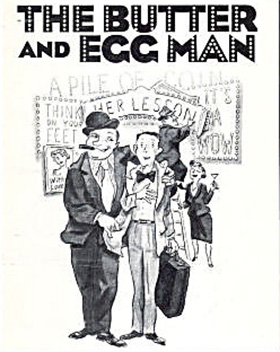
Other Plays in the Catalogue
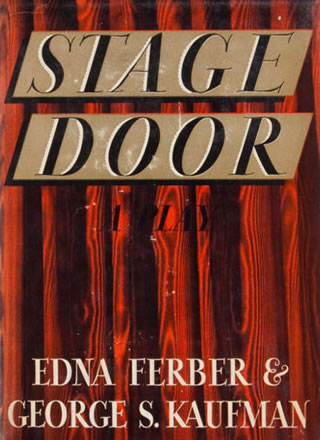
By Edna Ferber and George S. Kaufman. Cast size: 11 men, 22 women—not much doubling possible. Stage Door opened on October 22, 1936 at the Music Box Theatre and ran 169 performances.
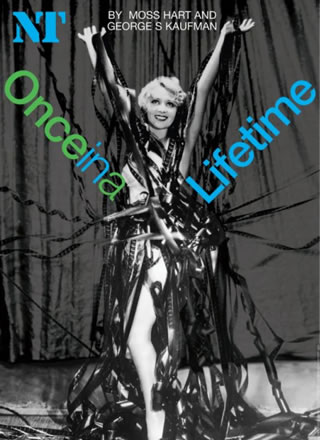
By Moss Hart and George S. Kaufman. Cast size: 20 men, 19 women, plus extras; 5 sets. Once in a Lifetime opened at the Music Box Theatre on September 24, 1930 and ran for 305 performances.
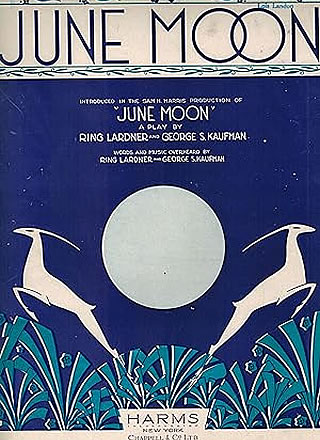
By Ring Lardner and George S. Kaufman. Cast size: 7 men, 5 women (One man can be cut); 3 sets. June Moon was the last major comedy to open on Broadway before the Stock Market Crash. It had its premiere on October 9, 1929 at the Broadhurst and ran 249 performances.
Table of Contents
Contact Us Today
Interested in bringing George S. Kaufman’s timeless plays to your stage?
Please refer to the contact information for each specific play on the various collection pages for direct amateur and professional licensing information.
Plays are represented by Concord Theatricals and Music Theatre International respectively.
If you are interested in first-class performance or film/television rights:
In the US, George S. Kaufman’s plays are represented by:
CPK Artists, LLC
In the UK, George S. Kaufman’s plays are represented by:
Alan Brodie Representation
For more information about George S. Kaufman or this website, contact:
Laurence Maslon
Literary Trustee, George S. Kaufman Estate